Daily Chronicles
Day 8: Oct 25, 2025 : EBC - The Summit Day
The Route: Lobuche → Gorakshep → Everest Base Camp → Gorakshep
Altitude: 16,210 → 17,150 → 17,600 → back to 17,150 ft / 4,940 → 5,164 → 5,364 → back to 5,164 m
Distance: ~9 km
Duration: 12 hours (including lunch)
“Everest Base Camp Day — The Day We Walked Into a Dream …”
After the usual breakfast, we set off for Gorakshep, the northernmost settlement on the classic Everest Base Camp trail. Appetite had clearly faded—thanks to altitude and the lingering effects of illness—but excitement carried us forward.
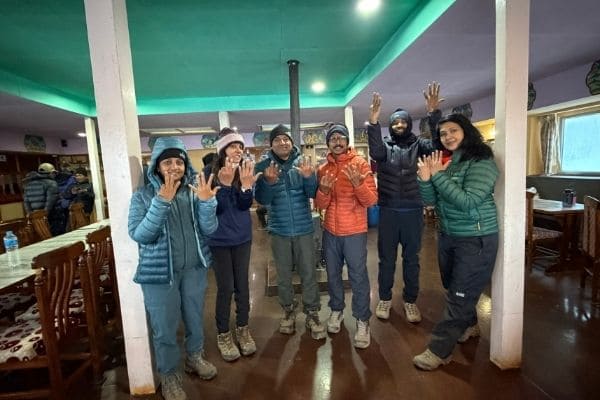
It was our earliest start of the entire trek, and the temperature was well below freezing. Every time we pulled off our gloves to take a photo or video, it felt like our fingers might snap off. The trail began relatively flat—though “flat” in this region has its own definition. As our ever-smiling assistant guide Bhoktha liked to say,“It is flat… just Nepali flat.”
Even these early sections demanded slow, deliberate steps. And once we crossed Lobuche Pass, it was uphill from there.
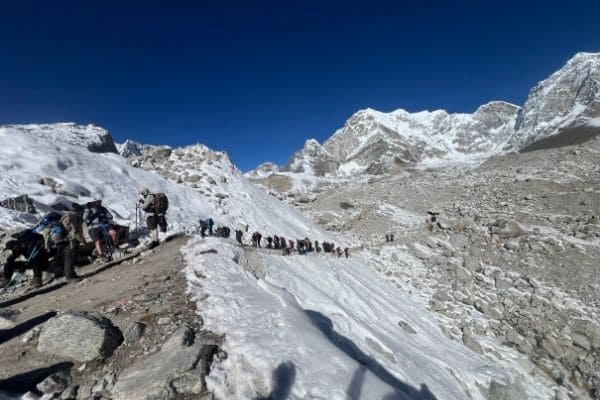
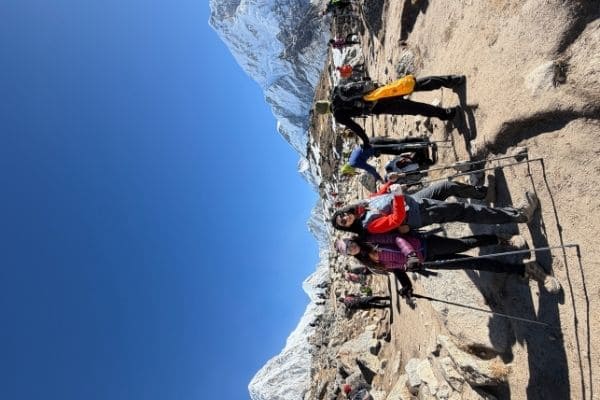
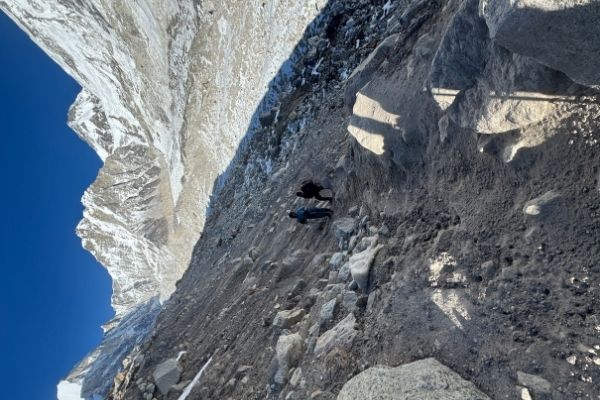
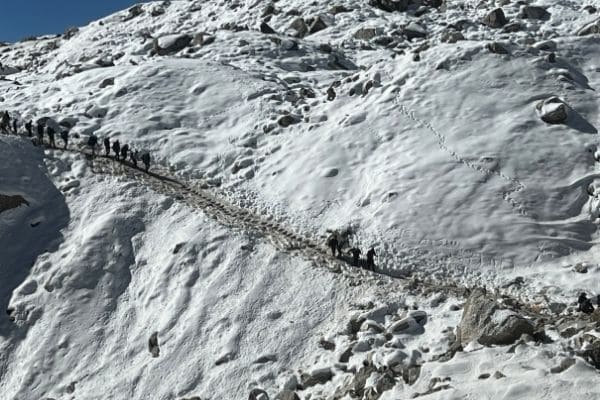
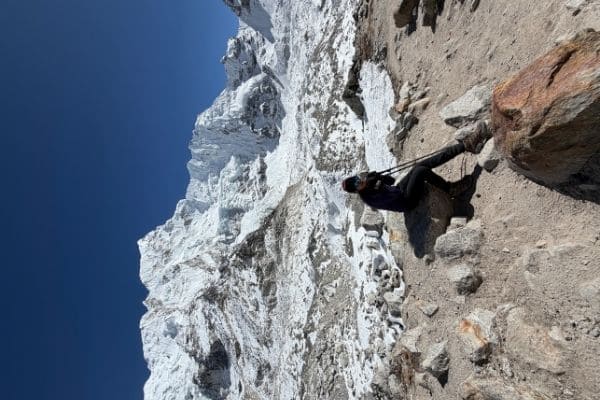
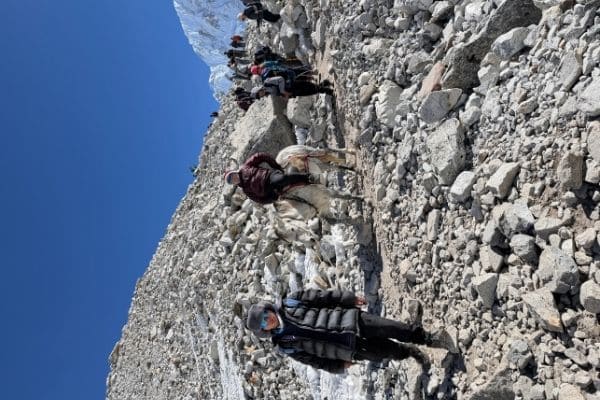
The trail led us through wide, barren, rocky fields with sweeping views of snow-capped Himalayan giants all around. We moved up, down, and around a well-worn dirt path littered with rubble from surrounding mountains and glaciers. The terrain was uneven, rocky, and at times icy—every step required focus. One careless move could easily mean a slip.
It was impossible not to notice how dramatically the landscape had changed. Just eight days earlier, we had started in lush forests, surrounded by colourful flora, spinning prayer wheels, and vibrant villages. Step by step, the trail had lifted us into a world of bare rock, towering peaks, and endless sky.
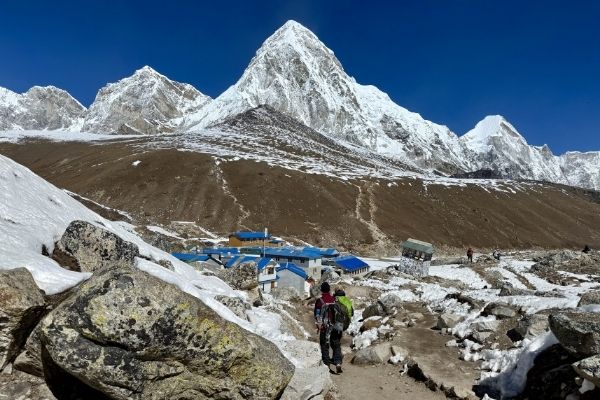
Gorakshep itself tells that story. The name translates to “Dead Ravens,” a stark reminder of how little life survives here. Yet the rocky plains and silvery mountains were hauntingly beautiful in their own way.
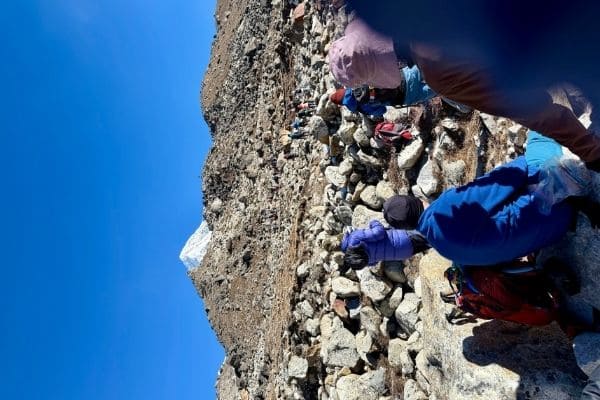
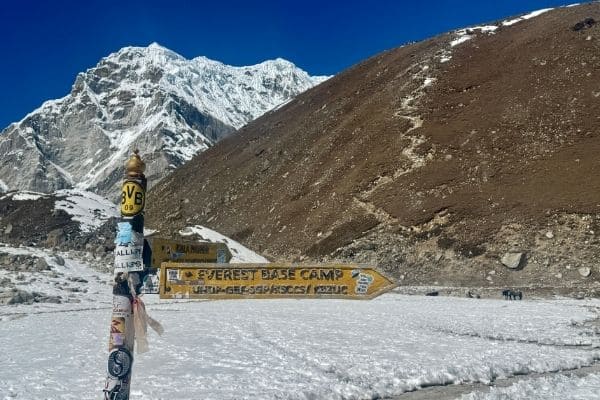
We walked alongside the Khumbu Glacier until Gorakshep finally appeared—the last settlement before Everest Base Camp. As we approached the Tea house there was a very unusual sight. A bust of Chtrapathi Shivaji Maharaj was installed outside the tea house. Apparently installed by Indian Mountaineers as part of Project Shivaji to honour the efforts of Sherpas Community and their collaboration in high altitude mountaineering expeditions.
After a quick bite, we unloaded our bags, kept only the essentials, and set out again. From here, we could already see the legendary Khumbu Icefall—the final hint of civilization before stepping into Everest’s domain.
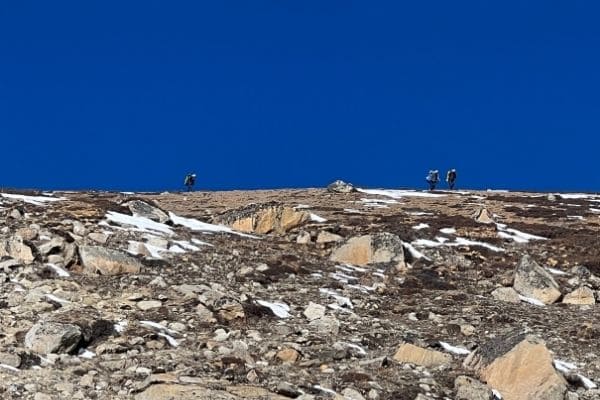
The most dangerous stretch of the entire trek awaited us now: a narrow, icy trail that demanded absolute attention. Our guides, trekking poles, sturdy boots, and the familiar one-step-at-a-time rhythm got us through safely.
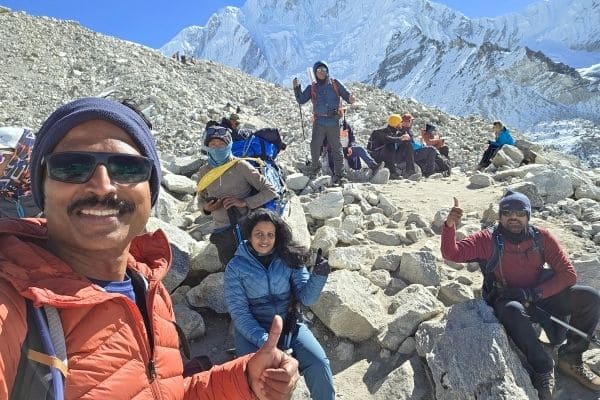
Many of us were running on fumes. Some paused often, leaning against rocks just to steady themselves. At one point, one of us—light-headed and dizzy—stopped and asked softly, “Remind me… why are we doing this?” No one was up to answering. More breathing attempts than talking. Through glances, small gestures, and tired smiles, we reassured one another and kept moving ahead.
All along, Nuptse Ridge stayed to our left, and the Khumbu Icefall crept closer with every step.
And then—after nearly two hours—we were there. From a distance one could see the tiny shape of the large rock symbolising the End point of the Everest Base Camp Trek and people moving towards it.
Everest Base Camp !!!
Eight days of trekking. About 72 kilometres (43 miles). Over 20,000 feet of elevation gain. And suddenly, we were standing at 17,600 feet above sea level, on ground that—just a year ago—had been nothing more than a distant dream.

View-wise, Everest Base Camp itself may not be the most dramatic sight of the entire trek. But emotionally, it was overwhelming, humbling, and surreal all at once.
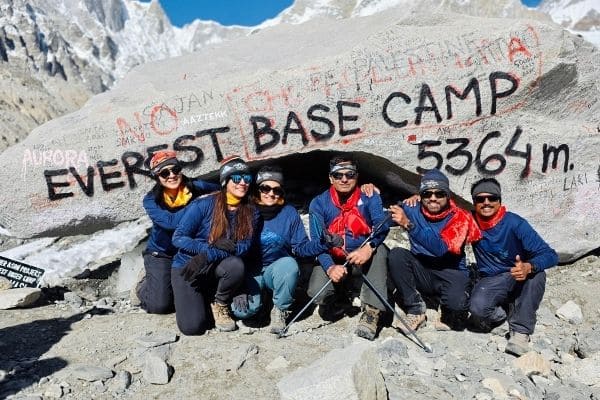
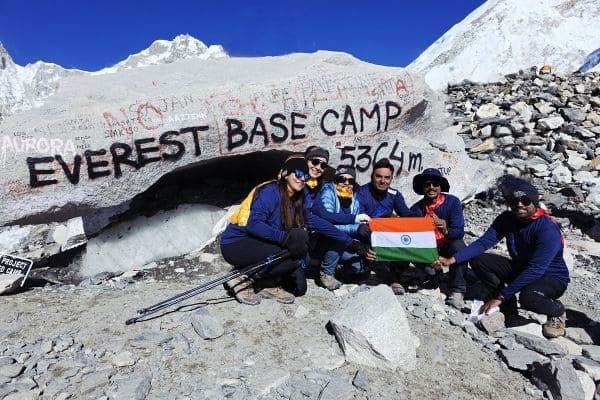
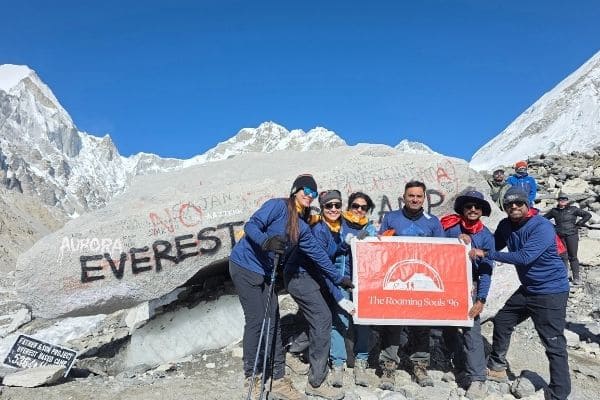
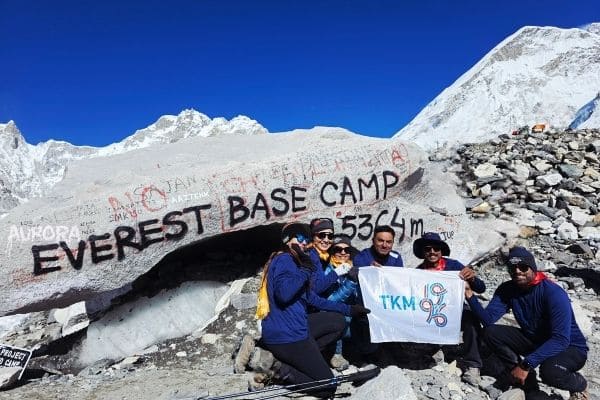
And just like the traffic jam short of Everest peak here there was a large number of people from across the world from many continents waiting for their turn to get photographed with their colourful flags, in front of the large rock painted “ Everest Base Camp 5364 metres “.
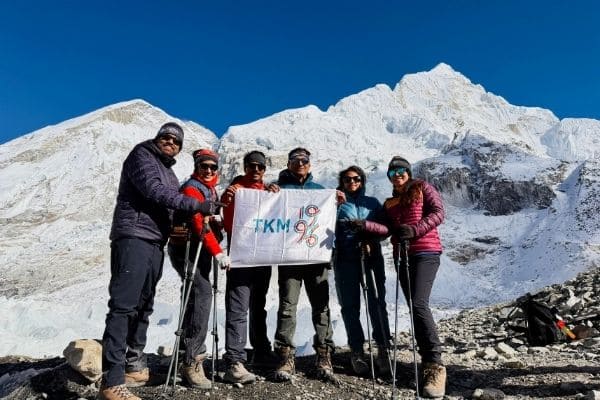
We unfurled our alumni flag and held it up proudly, the six of us — Campus to Summit in 30 years.
A friend from our graduating class had stood here with the same fabric a year earlier. Now, we were tracing his footsteps, adding our own story to it.
After about 45 minutes of soaking it all in and capturing whatever moments we could, we turned back toward Gorakshep.
Back at the lodge, reality caught up with us. With the goal achieved, the exhaustion, sleep deprivation, and illness we had pushed aside came rushing in. Some of us dozed off right in the dining hall.
Dinner was quiet. Maybe it was the altitude, maybe the chest congestion—most of us barely ate. We crashed earlier than we ever had on the trek. Some slept deeper than they had in ten days; others lay awake, still processing it all.
There was disbelief, yes—but also immense joy.
All six who had started this journey together, stood on Everest Base Camp, side by side—equally dusty, equally exhausted, equally humbled. A story we know will stay alive within us forever.

Note to the Mountains: Day 8
Today you gave us everything—
your coldest winds,
your narrowest ledges,
your steepest climbs.
You tested our breath, our balance,
our bodies, our resolve.
You offered no softness, no shortcuts,
only the truth of what it means
to walk toward a dream.
But then, you opened your world.
You let us walk beside the Khumbu Icefall,
and at last, you let us stand in the place
where so many dreams begin to take shape —
The Everest Base Camp.
Tonight, beneath your towering shadows,
With hearts over flowing, we say thank you—for the lesson,
for the struggle and we bow to the gift you gave us—
the chance to stand at your Base Camp, together, all six of us !
Your trekkers, humbled beyond words,
and altered in ways we are still learning to name.
Your trekkers, signing off for the day